

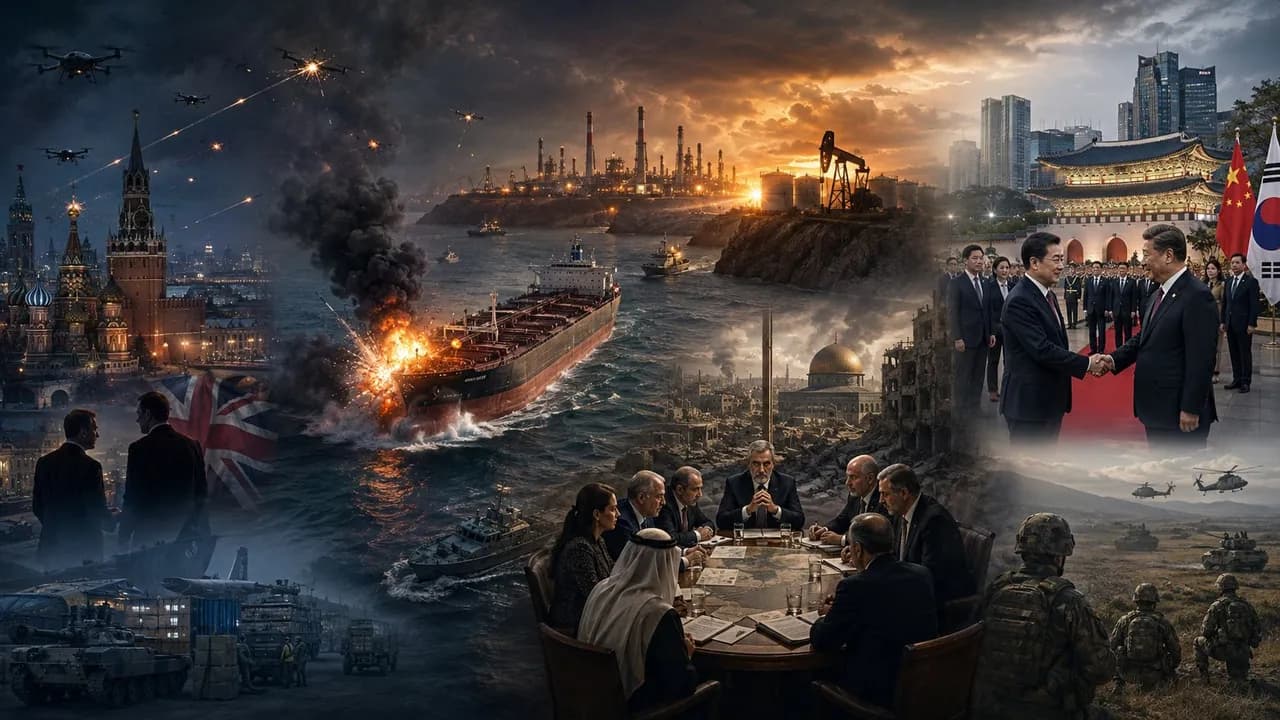
1. Russia Reports Massive Drone Attack on Moscow
Moscow and the surrounding region faced one of the largest drone strikes in recent history overnight. Russian authorities reported that hundreds of Ukrainian drones were launched, with Mayor Sergey Sobyanin confirming air defense activity and damage from falling debris. As long-range drone strikes become a central feature of the war, these attacks—targeting areas far from the front lines—mark a significant escalation.
2. Moscow Warns Britain Over Drone Supplies
Tensions between Russia and the UK have spiked following the overnight attacks. Moscow threatened London with "consequences" for supplying Ukraine with drones allegedly used in long-range strikes on Russian territory. While the UK Ministry of Defense has not confirmed the specific use of its equipment in these recent attacks, it remains committed to its aid package, which includes plans to deliver 150,000 drones to Ukraine by the end of 2026.
3. Iran Threatens Offensive Strategy as Oil Prices Rise
Global markets are reacting to a breakdown in US-Iran negotiations. Iran has signaled a shift toward a more offensive military strategy should diplomatic efforts fail, while the US remains reluctant to extend current ceasefire agreements. With the Strait of Hormuz—a vital energy corridor—at the center of this tension, Brent crude prices have climbed to $91.76 per barrel, the highest level since late July.
4. Commercial Vessel Struck in the Strait of Hormuz
Adding to regional instability, a commercial vessel was hit by an unidentified projectile in the Strait of Hormuz. One crew member was injured, and the ship sustained damage to its engine room. The incident has raised alarms, as any sustained threat to shipping in this critical chokepoint could force carriers to reroute, further impacting global energy supplies.
5. Gaza Peace Talks Stall
Diplomatic efforts to end the war in Gaza have reached a stalemate. Despite meetings between US envoy Jared Kushner, Israeli leadership, and Hamas representatives, no breakthrough was achieved. The core conflict remains: Israel demands the total disarmament of Hamas, while the withdrawal of Israeli troops remains a primary demand from the other side. Both parties have agreed to form working groups, though a comprehensive agreement remains elusive.
6. China’s Wang Yi to Visit South Korea
Chinese Foreign Minister Wang Yi is set to visit South Korea on August 19–20, marking his first official visit in five years. He is expected to meet with President Lee Jae-myung to discuss bilateral relations, regional security, and the situation on the Korean Peninsula. The visit comes at a pivotal time as the US reevaluates its military posture in the region.
7. Trump Scales Back US-South Korea Military Exercises
President Donald Trump has ordered a reduction in the scope of the annual 'Ulchi Freedom Shield' joint military exercises with South Korea. While the US aims to lower regional tensions, the move has sparked questions regarding the future of American security guarantees. South Korean President Lee Jae-myung emphasized the need for self-defense, noting that the drills are not aimed directly at North Korea, even as Pyongyang monitors the shift in US policy closely.
Key Takeaways
August 18 begins with multiple dangerous trends: the intensification of drone warfare between Russia and Ukraine, rising instability in the Middle East, and a shifting diplomatic landscape in Asia. With oil prices rising and global markets reacting to these uncertainties, the primary question remains whether diplomacy can prevent these conflicts from further destabilizing the world economy.